

Bright Annealed Seamless Tubes
ASR makes bright annealed seamless tubes that are smooth, high-cleanliness stainless steel tubes for systems where fluids flow and contamination, corrosion or bacterial buildup must be prevented. We also help buyers choose between bright annealed and solution annealed finishes.
Bright Annealed Seamless Tubes
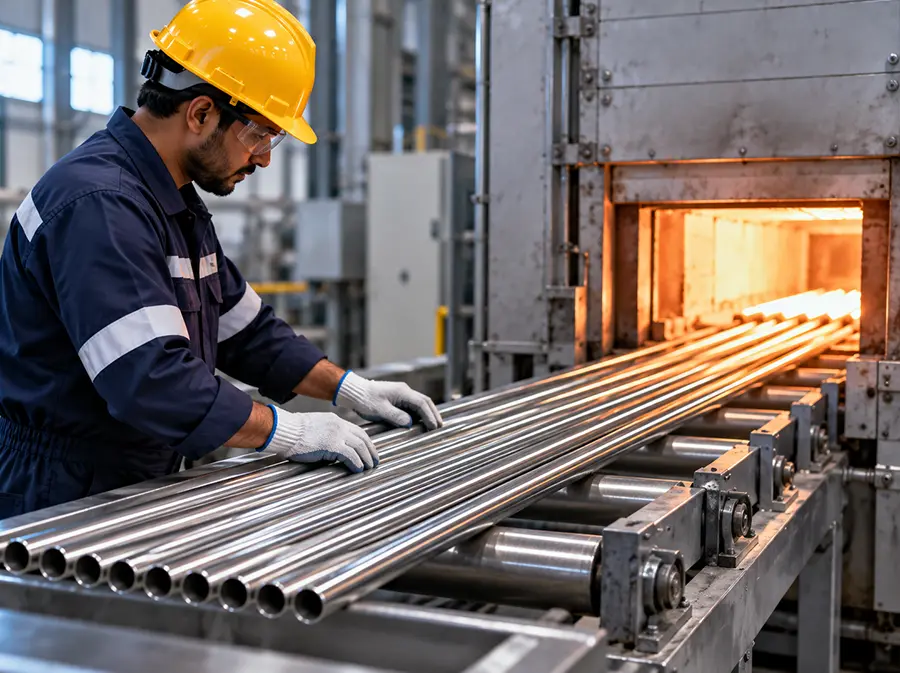
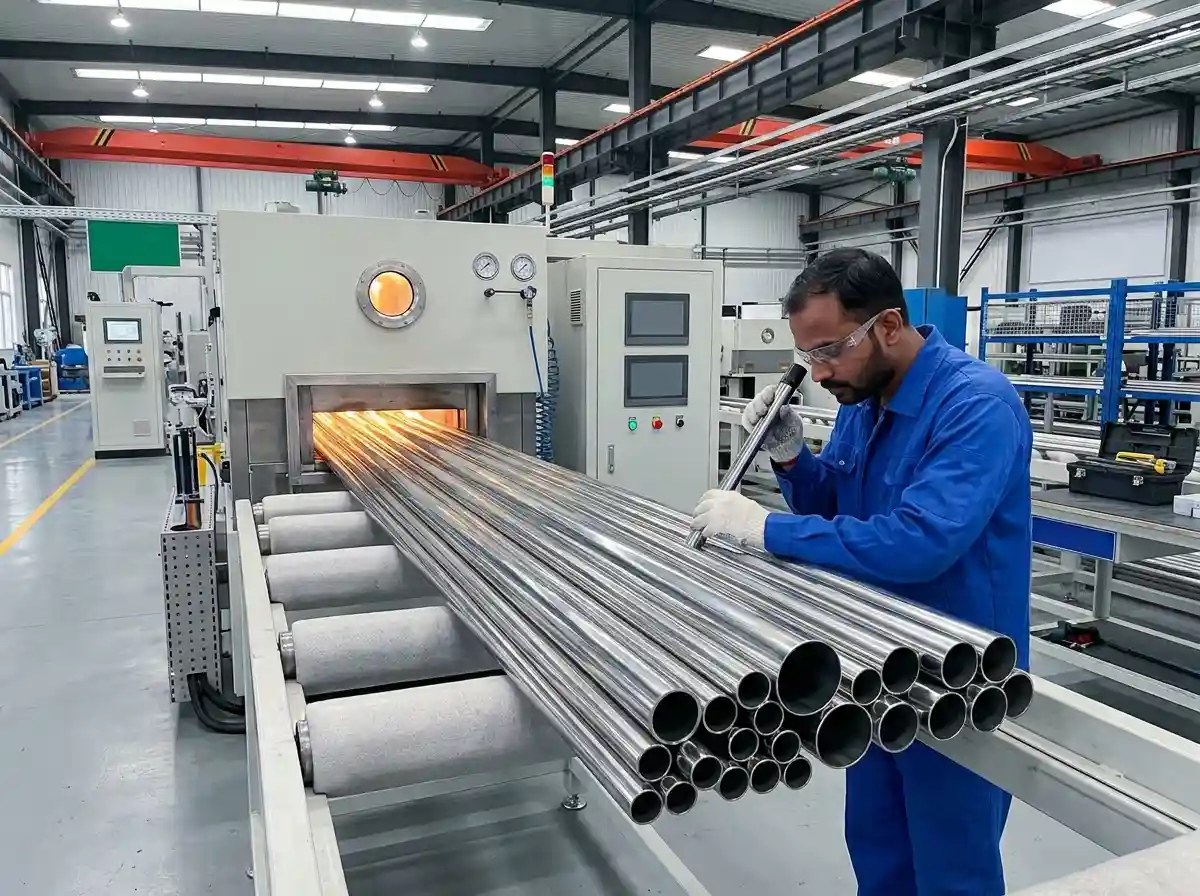
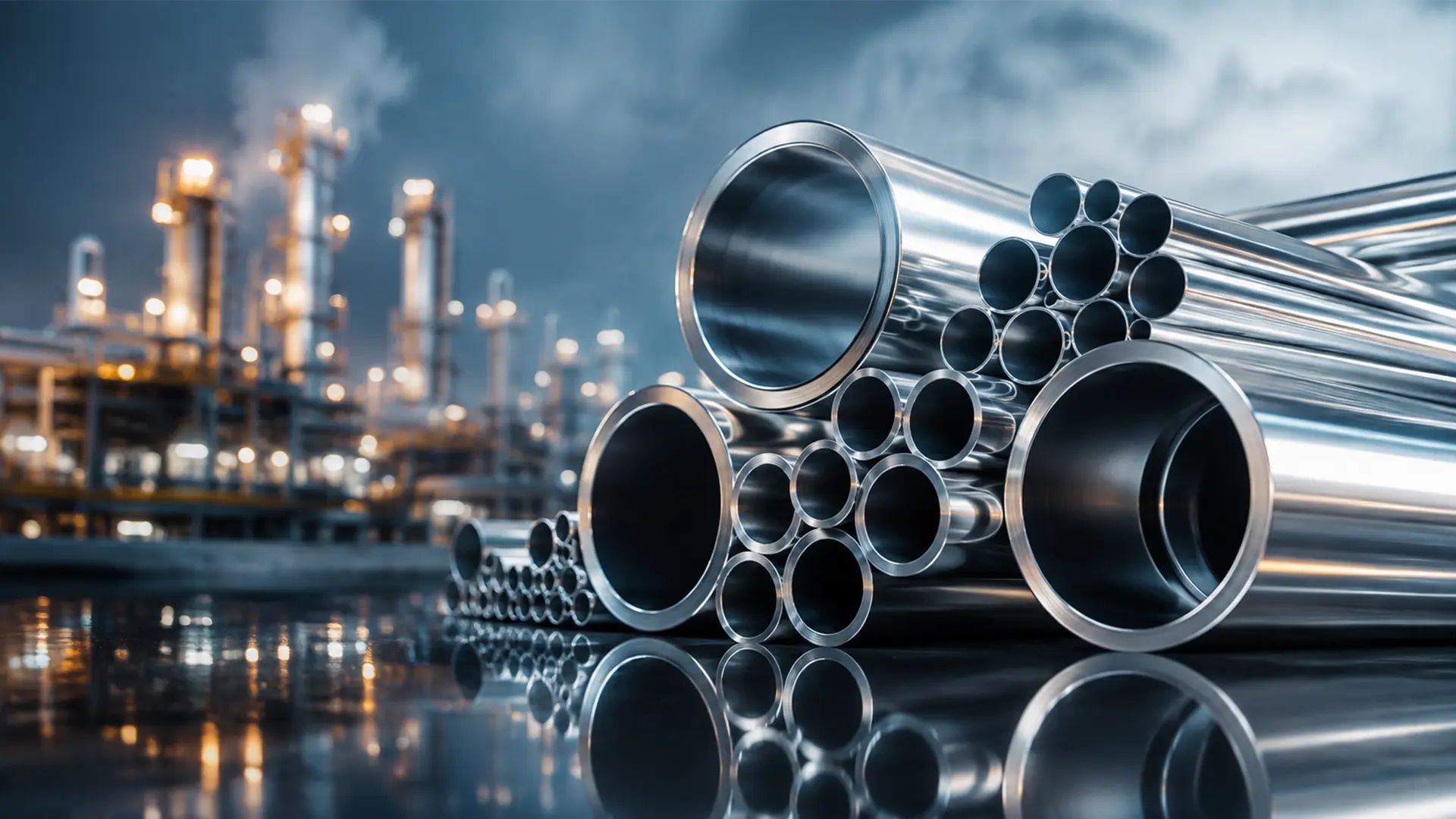
Bright annealed seamless tubes are high-cleanliness, smooth stainless-steel tubes built for industries where fluid moves through them, where prevention of contamination, corrosion, or bacterial buildup is necessary. At ASR, we make these tubes with a smoother inner and outer surface; the average roughness is below 0.4 micrometers. Also available in outside diameters from 4.00 to 50.80 mm in lengths of up to 25 meters, best suited for hygienic fluid systems in industries such as pharmaceuticals, food processing, dairy plants and biotechnology.
RA < 0.4 / 0.8 / 1.2 µm
ASTM A213 / A269 · EN 10305-1, EN 10216
In Short
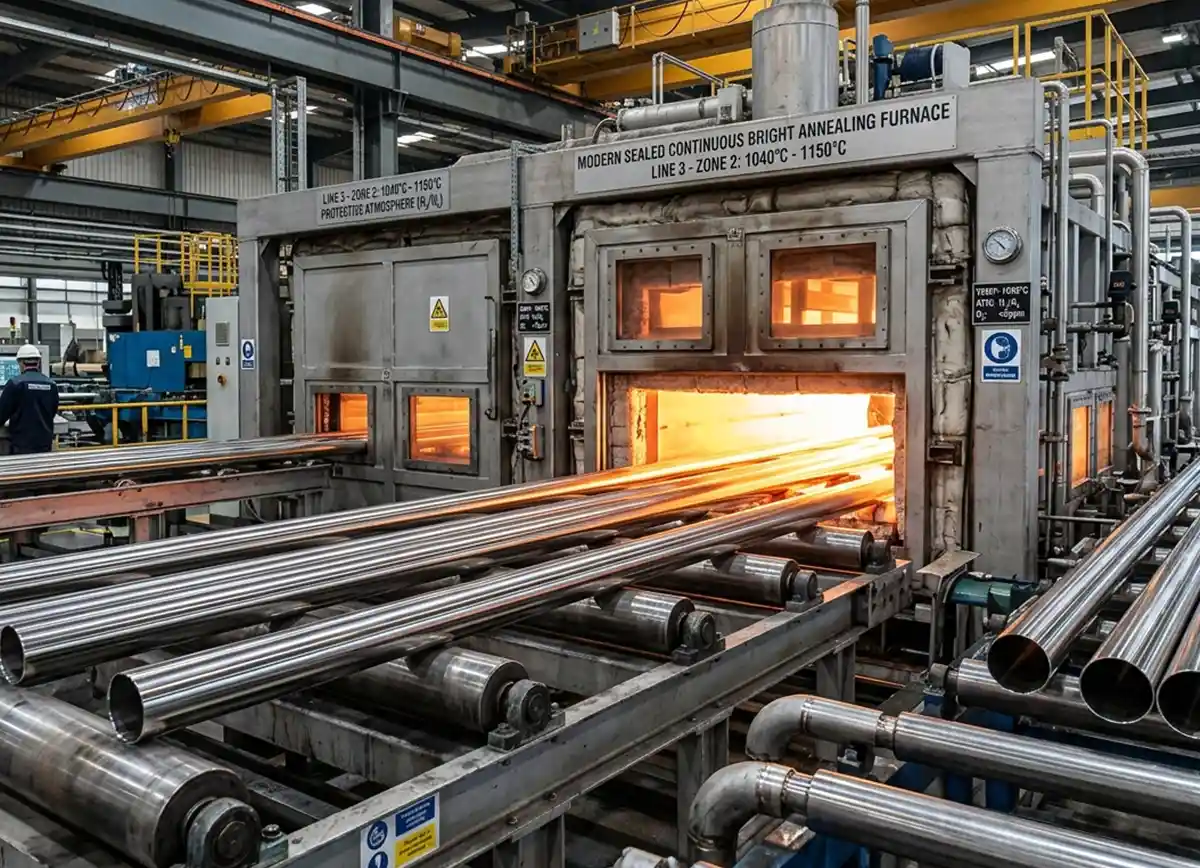
A bright annealed tube is stainless steel tubing that has been annealed inside a controlled, protective atmosphere, typically a blend of hydrogen and nitrogen, instead of being exposed to open air during heat treatment. We keep oxygen out of the furnace so that no oxide scale can form on the metal surface. The tube comes out of the annealing process already bright and reflective, reducing the need for acid pickling.
In systems that handle high-purity fluids, gases, or products where scale, roughness, or residue could compromise performance, cleanliness or flow, the level of internal surface quality matters most; it’s not just a preference but a defined requirement. ASR offers bright annealed tubes across a wide dimensional range that meet various engineering needs: outside diameters from 4.00 mm to 50.80 mm, wall thickness from 0.50 mm to 6.00 mm, and lengths of up to 25 meters.
OD 4.00 – 50.80 mm
RA < 0.4 µm available
WT 0.50 – 6.00 mm
ID & OD finish
- Choosing A Finish
Bright annealed or Solution annealed?
Both finishes leave you with a smooth tube that resists rust and can be used for everyday jobs. For cost-effective options, pickled and passivated options work best. The real question is whether the surface finish itself matters for what you are using it for.
| Bright Annealed (BA) | Solution Annealed (SA) | |
|---|---|---|
| Annealing Atmosphere | Controlled hydrogen/nitrogen; oxygen excluded | Air |
| Scale Formation | Nothing forms, so no need to remove anything. | Oxide scale and heat tint form, so they need to be removed. |
| How the Surface Is Cleaned | Not required | Acid pickling - HF + HNO3 dissolves the scale. |
| Resulting Appearance | Bright, reflective on ID and OD | Matte, uniform grey |
| Typical Surface Roughness | Lower | Higher: the acid etches the steel. |
| Best Suited To | Pharma, food, dairy, semiconductor, high-purity gas, biotech. | Oil & gas, power, chemical process. |
| Relative Cost | Higher | Lower |
Note: We have our own NABL-accredited laboratory under ISO/IEC 17025, so every test runs in our own lab. If our client wishes to run tests with a third-party lab, then we are partnered with TÜV.
RA - And Which One to Put on Your Order
RA stands for average roughness; it’s derived by measuring the surface over a set length and finding the average distance each point differs from the centerline. The lower the RA number, the smoother its surface will be. When the surface is smoother, bacteria or any other residue won’t stick to it easily. RA is measured in micrometres (µm), also known as microns.
Ultra-High Purity
RA < 0.4 µm is used for pharmaceutical and biotech process lines, water-for-injection and clean-steam systems, and bioprocess skids. This grade is specifically used in GMP specifications.
Hygienic Process
RA < 0.8 µm is used for food, drink, and dairy processing lines, CIP/SIP systems, and brewing. It’s smooth enough for reliable in-place cleaning, without paying for the finest finish.
General Hygienic
RA < 1.2 µm is best used for standard hygienic or sanitary applications, where you require a bright, easy-to-clean bore, but don’t need a sub-micron finish.
How Bright Annealing Works
To reverse the effect of cold work, annealing exists. When a tube is reduced to its final size, the process hardens the metal, locking residual stress into its structure. With the process of reheating the tube, this can be reversed: the grain structure restores the ductility of the metal, and critically for stainless steel. By recrystallising the grain structure, we restore the metal’s ductility and, critically for stainless, redissolve the chromium back into solid solution.
The real question isn’t whether annealing happens, but in what atmosphere it happens. If the tube is annealed in open air, the hot stainless steel reacts immediately with the surrounding oxygen, forming a tough, adherent oxide layer visible as a heat tint and scale. The layer needs to be removed, and we remove it using an acid pickling bath. The pickling works by chemically attacking the surface; acid dissolves the oxide scale and a thin layer of the base steel beneath it.
Bright annealing takes a different approach; it prevents the oxide from forming at all, instead of removing the oxide after the fact. We heat the tube to roughly 1040-1150 °C inside a sealed furnace charged with a protective atmosphere.
No Oxide Scale: When oxygen is excluded, none forms.
No Pickling: Nothing is left to be dissolved afterwards.
Smooth Tube Preserved: The drawn surface survives intact.
Lower RA than an annealed-and-pickled equivalent.
Reflective Finish on ID and OD.
Cleanable - less surface for product to hold up on.
- Material Testing
Ensuring Completion, Not Merely Asserting It
How true a surface finish claim is depends completely on what the measurement behind it is worth. The RA is measured with a surface roughness meter, and the result is recorded against the order. So it’s safe to say that the number on the certificate is just a reading, not a nominal value copied from a catalogue.
Surface Roughness
We measure RA with a surface roughness tester and record it against the ordered grade.
ID Borescope
We inspect the bore visually and run it specifically for bright annealed and high-purity tube.
Eddy Current
Automatic scan of the full tube to identify any surface and near-surface flaws.
Ultrasonic
Automatically checks the thickness of wall, check for internal defects along the entire length.
Chemical
Using an OES spectrometer, we check composition for each heat; a portable PMI device confirms the grade.
Metallurgical
Grain size checked per ASTM; resistance to intergranular corrosion checked per ASTM A269.
Dimensional
We check everything: outer diameter, wall thickness, length, and straightness before shipping.
Hydro Testing
We test tubes under controlled pressure to detect leaks and verify their strength, integrity, and suitability for service.
Note: We have our own NABL-accredited laboratory under ISO/IEC 17025, so every test runs in our own lab. If our client wishes to run tests with a third-party lab, then we are partnered with TÜV.
Why do Buyers Trust our Bright Annealed Tube?
RA was measured and recorded
ID borescope inspection
Hydro Inspection
Smooth finish
NABL-accredited lab on site
Sleeved and end-capped
- Material Grades
Grades we Offer: Bright Anneal
One of the three grades is used by almost all sanitary and high-purity applications. Whichever you choose, the question stays the same: “How much chloride will the tube be exposed to, and what validation paperwork is needed.
SS 316/ 316L
This is ideal as per the pharma standards; it contains molybdenum, helping resist chloride damage, and the low-carbon version stops weak spots from forming at the weld.
- Individuals & small projects
SS 304/ 304L
This is ideal for less demanding conditions, usually used in food & general goods. Many food, beverage, and general sanitary lines work fine on 304L and usually cost less than 316L.
- Food & General
SS 316Ti
It is best suited for high-temperature applications where resistance to corrosion and sensitisation is important. Titanium stabilisation helps maintain strength and corrosion resistance during prolonged exposure to heat.
- High-Temperature Applications
Other Austenitic Grades
321, 347 and higher-alloy grades can be bright annealed on enquiry where the service needs them.
- On Enquiry
Where Bright Annealed Tube is Specified
What’s one thing that brings these industries together is that the inside of the tube comes into contact with something that shouldn’t be contaminated, and the line needs to be cleaned without being dismantled.
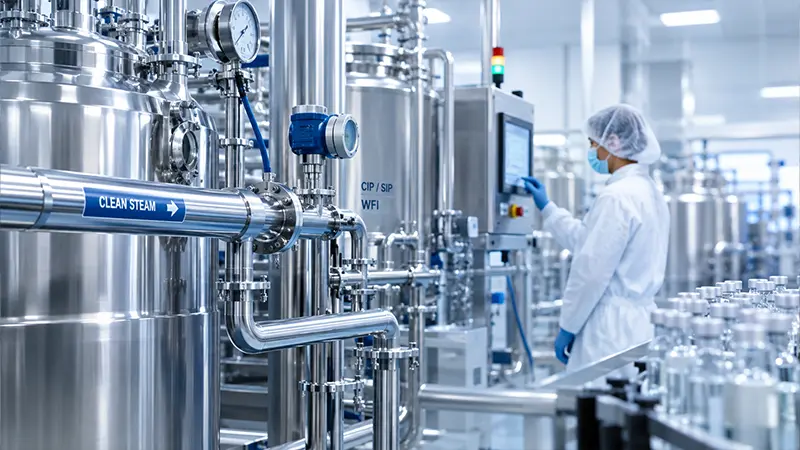
Pharmaceutical
Clean-steam distribution, CIP/SIP cleaning circuits, process and utility lines, WFI systems. The preferred choice is 316L with an RA under 0.4 µm.
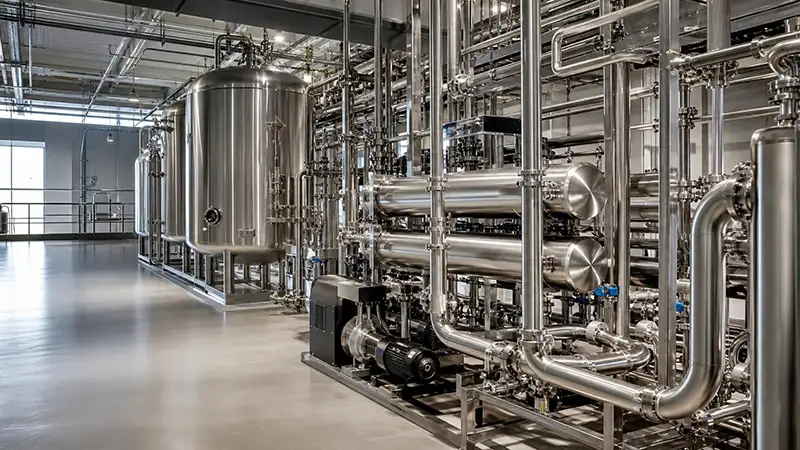
Biotechnology
Downstream processing lines, fermentation systems, bioprocess skids, where even a little product residue trapped in the bore could lead to contamination.
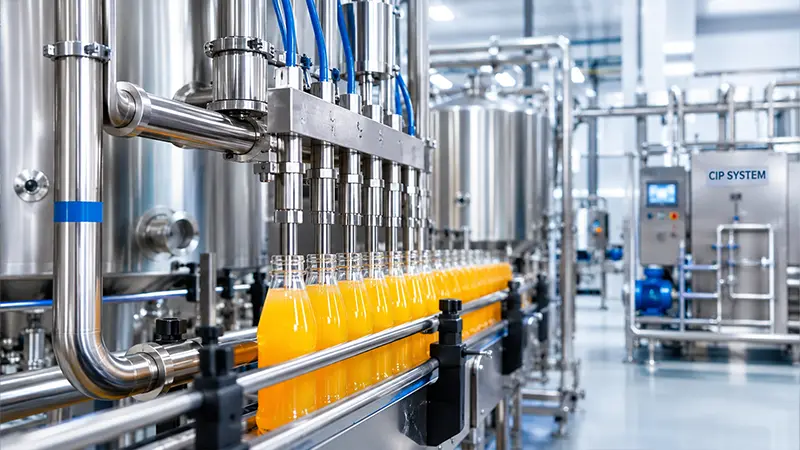
Food & Beverage
Used for transferring product, filling lines, and CIP systems. An RA of 0.8 µm is basically smooth enough and more cost-effective.
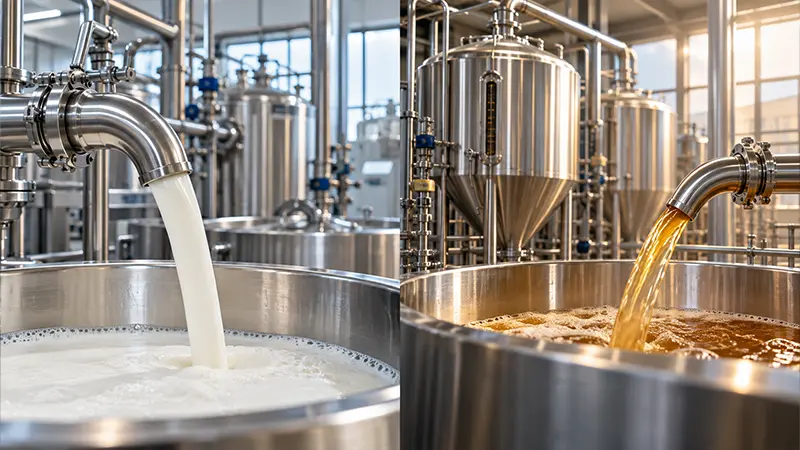
Dairy & Brewing
Smooth bore is extremely important for that cleaning that actually works; dairy & brewing are used for milk, wort, and other product lines that get cleaned in place daily.
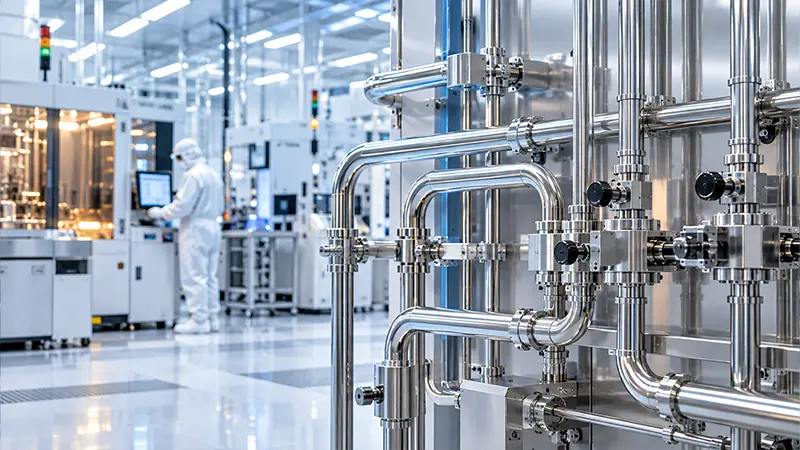
Semiconductor & High-purity Gas
For such industries, ultra-clean distribution systems are extremely important; controlling particles and outgassing is equally important as preventing corrosion.
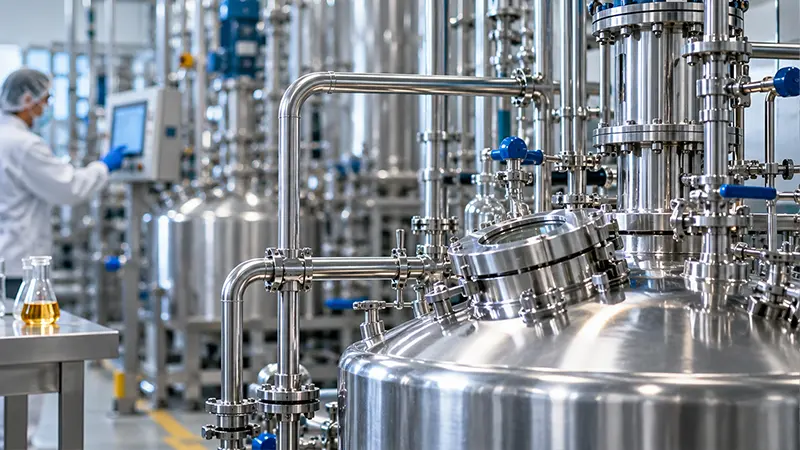
Fine Chemicals
For these industries, its essential to avoid any product carryover between different production runs.
Standards we Manufacture
The difference between bright annealed tube and a normal seamless tube is that the bright annealed tube has gone through an extra heat-treatment process that makes its surface very smooth and shiny. Businesses do not need to order it through a completely different standard; the usual tube specification works well.
ASTM A213 / ASME SA213
ASTM A269 / ASME SA269
EN 10216-5 TC1 / TC2
EN 1127 (D4/T4 · D4/T3 · D3/T3)
EN 10305-1 (precision tubes)
EN 10204 3.1 / 3.2 (inspection documents)
- Contact Us
Get a Quote Today
Corporate Office
B-210, Mondeal Square, Opp. Honest Restaurant, Nr. Prahaladnagar Garden, S.G. Highway, Ahmedabad – 380015, Gujarat, India
Factory & Operations
Survey No. 48, Ahmedabad–Bagodara Highway 8A, Opp. Super Gas, Nr. Mongal Mata Mandir, Kalyangadh – 382240, Ahmedabad, Gujarat, India