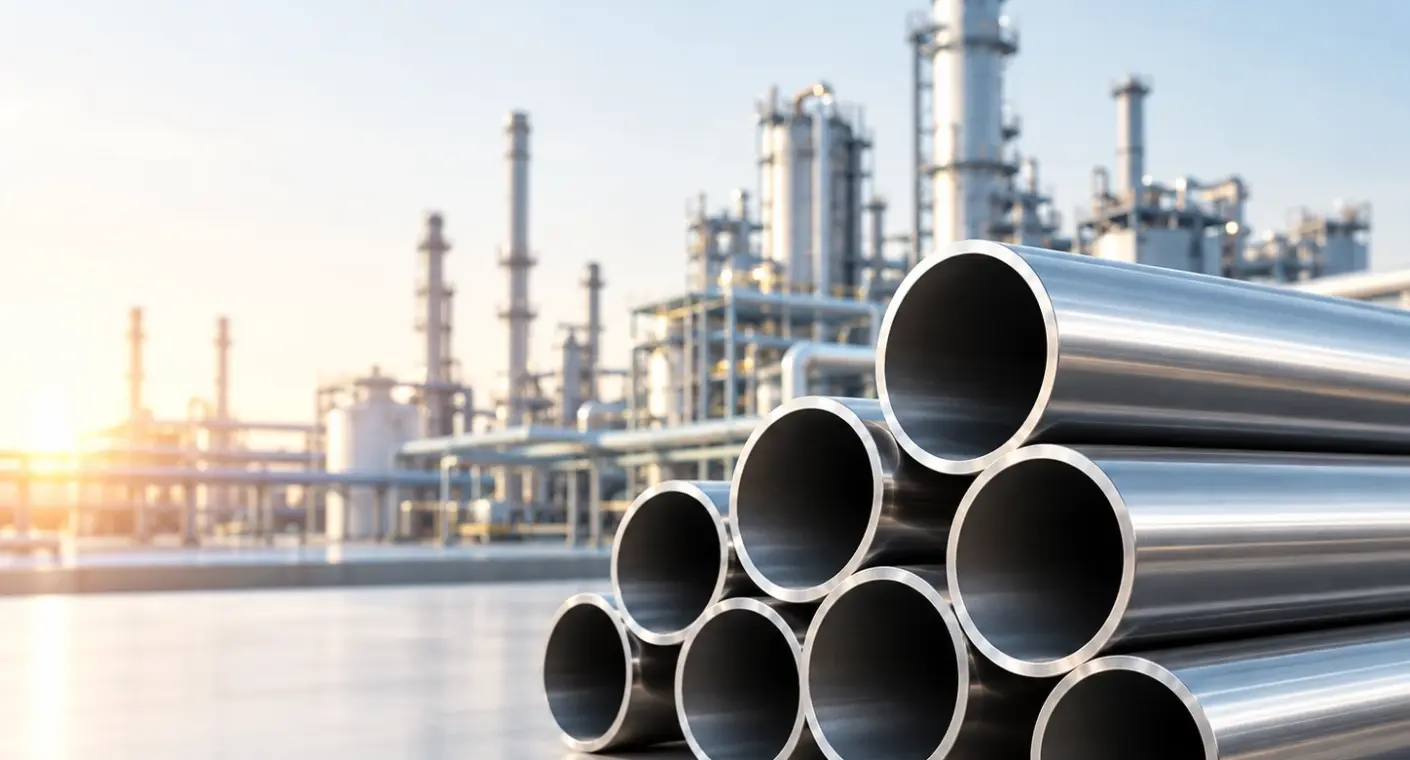
Inside an industrial plant, hundreds of things happen and continue to happen simultaneously. Fluids move via pipelines, pressure builds, temperatures change rapidly, and production continues without pause. Amid all this activity, one component quietly holds everything together and intact: the piping system. But not every pipe can effectively withstand these demands. This is where stainless steel seamless pipes come into the picture.
Understanding Stainless Steel Seamless Pipes and Their Types
Stainless steel seamless pipes are manufactured from solid steel billets that are heated and pierced to create hollow tubes. These pipes don’t have a welded seam along their length, making them well-suited for use cases that require strength, corrosion resistance, and reliable performance under pressure.
These pipes are widely used in oil and gas, chemical processing, power generation, pharmaceuticals, and food production. Their ability to handle demanding operating conditions makes them a feasible choice for transporting liquids and gases across various industrial settings.
Common Types of Stainless Steel Seamless Pipes
Stainless steel seamless pipes are available in different grades, each suited to specific applications and operating conditions. Let’s explore five of the most commonly used pipes and their uses.
- Austenitic Stainless Steel Pipes: These pipes offer excellent corrosion resistance, good formability, and performance across a wide temperature range. Grades 304 and 316 are often used in food processing, pharmaceutical facilities, and chemical plants. Grade 316 offers better resistance to chloride-related corrosion.
- Ferritic Stainless Steel Pipes: They contain over 10.5% to 30% of chromium and are generally magnetic. They provide good resistance to corrosion and stress corrosion cracking in suitable environments. A majority of use cases include automotive exhaust systems and industrial equipment.
- Martensitic Stainless Steel Pipes: These pipes are popular for their hardness and strength. They can be heat-treated to achieve specific mechanical properties. They are typically a first choice when it comes to pumps, valves, and machinery where strength and wear resistance are essential.
- Duplex Stainless Steel Pipes: Duplex stainless steel pipes combine the properties of austenitic and ferritic stainless steels, delivering high strength and durable corrosion resistance. They are commonly used in offshore platforms, oil and gas facilities, and chemical processing plants.
- Precipitation-Hardening Stainless Steel Pipes: These pipes go through specialized heat treatment to achieve high strength while retaining useful corrosion resistance. They are best-suited for demanding applications in aerospace and specialized industrial equipment.
As per the requirements of your application, you can finalize the most suitable pipe. For instance, a chemical firm generally wants a pipe that can support operating pressure, high temperatures, and exposure to corrosive substances. It helps to choose the appropriate grade to ensure reliable performance and a longer service life.
How Stainless Steel Pipes and Welded Pipes Differ?
There are two major techniques to manufacture stainless steel pipes: seamless and welded. The actual difference lies in how the pipe is created, which affects its construction, expense, and suitability for several industrial applications.
Seamless Pipe Manufacturing
Seamless pipes start as solid stainless steel billets. These billets are heated and pierced to form hollow tubes. The tubes are then rolled or drawn until they reach the required diameter, wall thickness, and length. Since there is no welded joint along the pipe, this manufacturing method is often chosen for applications involving high pressure, such as oil and gas processing, refineries, and power plants.
Welded Pipe Manufacturing
Welded pipes begin as flat stainless steel sheets. These sheets are shaped into cylinders, and their edges are joined through welding. Depending on how the pipes are made, manufacturers may use electric resistance welding (ERW) or submerged arc welding (SAW). This process allows manufacturers to produce pipes in different sizes, making them suitable for structural work, water supply systems, and various industrial uses.
So, which type is suitable for your enterprise?
It actually depends on the operating conditions and the overall project requirements. Seamless pipes are often the preferable choice since pressure demands and servicing conditions call for their specified characteristics. While welded pipes turn out as an cost-efficient choice for use cases that suit their design and specifications. Well, the final decision is always on the operating pressure, temperature, corrosion exposure, and required dimensions.
Stainless Steel Pipe Standards and Specifications
Stainless steel pipes are meant to support specific requirements when you are considering material composition, manufacturing, dimensions, and rigorous testing. Industry standards ensure pipes are best-suited for their intended applications. ASTM International sets the specifications for these pipes, covering different materials, manufacturing processes, and service conditions.
Some commonly used ASTM specifications include:
- ASTM A312: It covers seamless, welded, and heavily cold-worked austenitic stainless steel pipes.
- ASTM A790: It covers seamless and welded duplex stainless steel pipes.
- ASTM A928: It covers duplex stainless steel pipes manufactured with the help of electric-fusion welding.
- ASTM A213: It covers seamless ferritic and austenitic alloy-steel boiler, superheater, and heat-exchanger tubes.
Every specification has different requirements, so the ideal one depends on the pipe material, manufacturing technique, and intended operating conditions.
ASTM A312 Stainless Steel Pipes and Common Grades
ASTM A312 is a popular choice when it comes to austenitic stainless steel pipes in organizations such as oil and gas, chemical processing, food production, and pharmaceuticals. It covers both welded and seamless pipes designed to withstand high temperatures and general corrosive service.
Some commonly used grades under this specification include:
- Grade 304/304L: It delivers good corrosion resistance for general industrial applications. Grade 304L has a lower carbon content, which allows it to reduce the risk of sensitization during the welding process.
- Grade 316/316L: It contains molybdenum, offering enhanced resistance to pitting and crevice corrosion in many chloride-containing environments.
- Grade 321: This contains titanium to help prevent sensitization during exposure to elevated temperatures.
- Grade 347: It comprises niobium that helps to prevent sensitization when a pipe is openly exposed to high temperatures.
The right grade depends on a variety of factors like its operating temperature, exposure to corrosive substances, and the mechanical requirements of the application.
Duplex and Super Duplex Pipes: ASTM A790 and A928
Duplex stainless steel pipes combine two microstructures, namely austenite and ferrite, to provide incredible strength, durability, and good corrosion resistance. Super duplex grades, on the other hand, provide more resistance to pitting and crevice corrosion, as the environment demands.
ASTM A790 covers seamless and welded duplex stainless steel pipes, while ASTM A928 covers duplex pipes created by using electric-fusion welding. These pipes are usually used in offshore oil and gas operations, desalination plants, marine systems, and chemical processing facilities.
Duplex stainless steel is the ideal choice if you are going for high mechanical strength and durability against chloride-induced stress corrosion cracking. Preserving a material’s intended properties isn’t as easy as it seems. Welding needs careful control over the heat input and related parameters.
Why Choose ASR Met Tech for Stainless Steel Pipes?
Finding high-quality, lasting stainless steel pipes for industrial use involves more than just the price. Ensure it delivers consistent manufacturing, the right specifications, and timely delivery. One such renowned enterprise is ASR Met Tech.
The company brings reliable experience in seamless pipe manufacturing in India, supplying pipes for a range of industrial needs. The focus is on using quality materials, maintaining precision during production, and following relevant industry standards so businesses can find pipes that suit their applications and working conditions.
Applications of Stainless Steel Seamless Pipes Across Industries
Stainless steel seamless pipes are used in sectors where strength, corrosion resistance, and reliable performance are essential. Their construction makes them suitable for demanding applications that involve higher pressure, temperature variations, and corrosive substances.
- Oil and Gas: These pipes are used in oil refineries, offshore platforms, labs, and processing plants to transport crude oil, natural gas, and other fluids. Their strength and corrosion resistance make them suitable for demanding operating conditions.
- Chemical Processing: Chemical plants handle corrosive liquids and reactive substances that can damage ordinary pipes easily. Stainless steel seamless pipes, particularly Grades 316 and duplex, are well-suited when it comes to chemical transfer lines and processing equipment. For example, most chemical plants use Grade 316 seamless pipes for the purpose of transporting corrosive liquids through processing lines.
- Power Generation: Power plants use these pipes in boilers, heat exchangers, and even steam distribution systems. Their ability to withstand high temperatures and pressure makes them a great choice for demanding power generation processes.
- Food and Beverage: Grades 304 and 316 are often used in food processing lines, liquid transfer systems, and equipment. Their corrosion resistance and easy-to-clean surfaces support hygienic processing.
- Pharma: Pharmaceutical facilities use stainless steel seamless pipes in fluid transfer systems and process lines. Their corrosion resistance and compatibility with cleaning procedures make them well-suited for use cases needing controlled hygiene.
The right pipe grade mostly depends on the material being transported, operating conditions, and sector requirements. Choosing the appropriate specification helps ensure reliable performance and longer service life.
Bottom Line
Choosing the right stainless steel seamless pipe comprises more than just comparing grades and specifications. Factors such as operating conditions, corrosion resistance, pressure requirements, and manufacturing quality all play an integral role. As seamless pipe manufacturing in India continues to serve diverse industrial needs, selecting a reliable manufacturer such as ASR Met Tech helps businesses source pipes suited to their applications.